Realtors had abandoned a dashboard built to store data, not drive decisions.
Behavioral data across 200,000+ historical actions showed a steep drop-off in dashboard use: realtors were leaving the desktop-heavy interface for manual tools and third-party apps. Interviews with active realtors confirmed the root cause: they live on the road, between showings and closings, and a tool that assumed they were sitting at a desk was a tool they routed around.
I waste more time clicking between apps than closing deals.
The dashboard had been built as a repository: somewhere to store and display deal data. What realtors needed was a command center: somewhere to act. The gap was not cosmetic. Every extra tap between a new lead and a response was time a competing realtor used to close, so interface friction converted directly into lost deals.
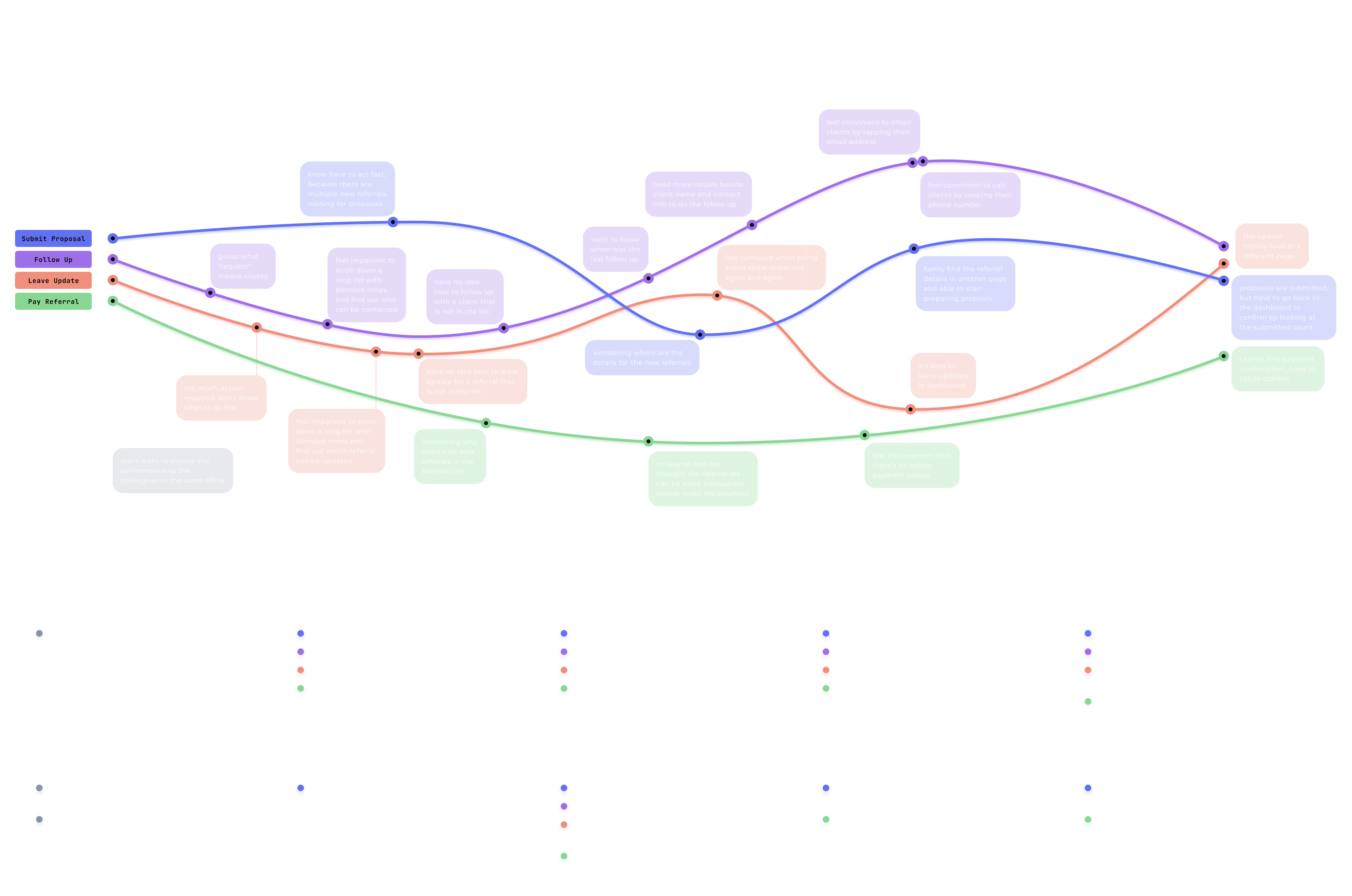
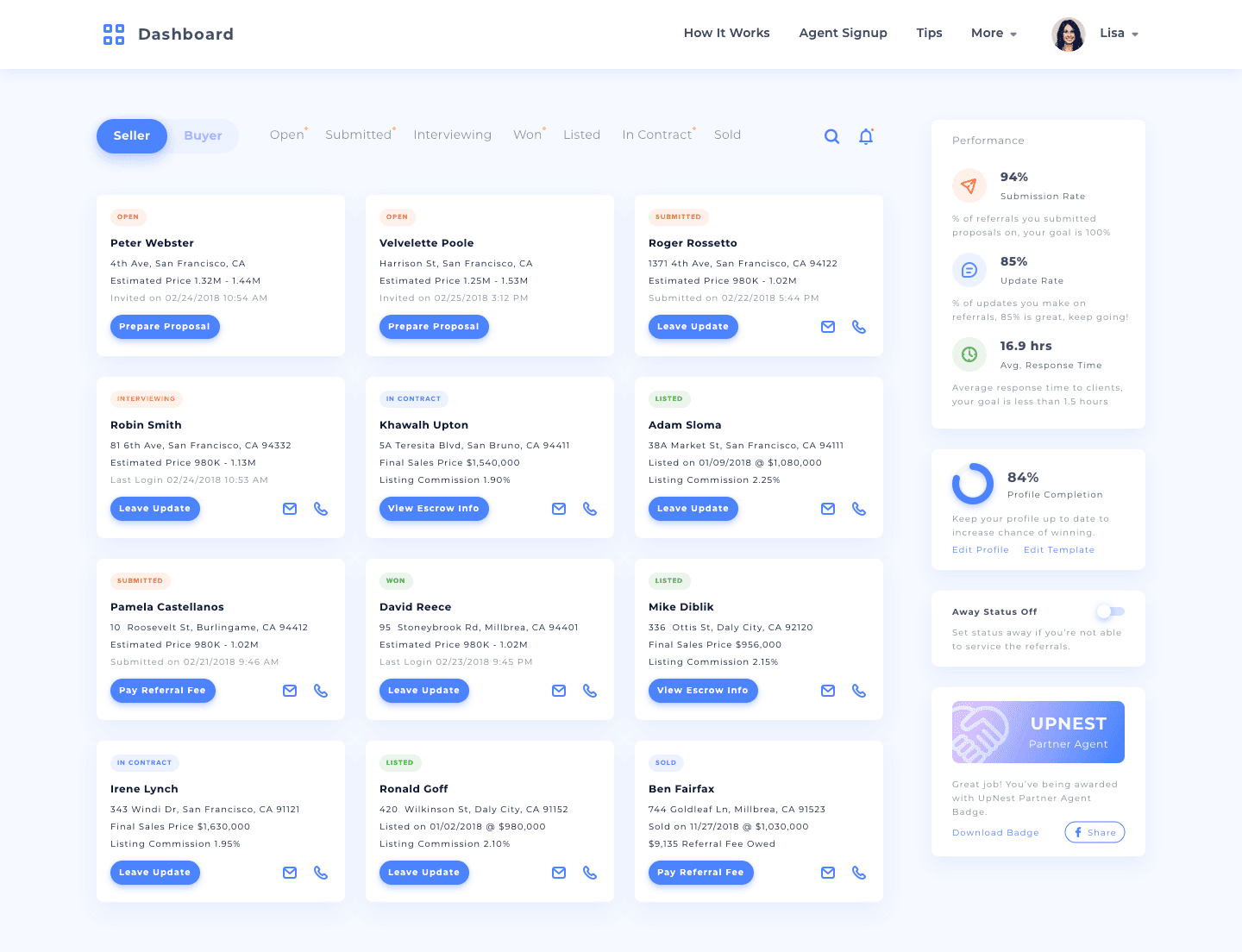
A mobile-first command center that surfaces the next action, not the whole database.
I reframed the product from displaying data to driving action, then organized the build around how realtors actually work. The architecture had to render the next decision, not the database behind it:
- Mobile-first architecture: a native iOS and Android app plus a responsive web platform, with a three-tap rule for every core task.
- Contextual business logic: deal state mapped across its full lifecycle, seven statuses for sellers and six for buyers, then distilled to three universal anchors so the command center surfaces only the immediate next step.
The state mapping was the core architectural move. Instead of one view sized for the busiest realtor, I documented the information and actions relevant at each point in a deal's lifecycle, then collapsed that matrix into three anchors every realtor sees, whether they were carrying one deal or fifty. The tradeoff was deliberate: three anchors hold less status-specific nuance than a bespoke view per state, but they made the command center legible at a glance anywhere in a deal. Volume changed the contents; it never changed the shape.
If a realtor can't finish a core task in three taps, the design isn't finished.
I ran delivery as well as design: wrote the PRD, managed four engineers, and contributed front-end development to hold fidelity from mockup to shipped build across both native platforms and the web.
Triple the deal volume on flat headcount — and an acquisition.
The redesign turned the product from a churn risk into an asset that scaled with the business:
- Faster client reach-out by partner realtors
- 2.24×
- Transaction-volume capacity, with no increase in headcount
- 3×
- Reduction in average time-to-close
- 15.2%
* Movements shown as multiples and percentages against pre-redesign baselines, measured over the first year after launch; absolute volumes omitted.
Scale came from removing friction, not from adding headcount.
UpNest was acquired by Realtor.com in 2022, and the platform's operational leverage was a material part of what made it worth acquiring. I had carried the product from diagnosis to shipped code: product management, design, and front-end. That span is the range the institutional-infrastructure work now runs at a larger scale.